

Excellence in Thermal Management: Motor Class H Insulation and Safe Temperature Control Mechanisms
A craftsman’s dedication to engineering excellence: The safety protection mechanism of the fan motor.
An In-Depth Look at Material Thermal Limits and Active Protection Technologies: Building a Comprehensive, Industrial-Grade Thermal Defense Network
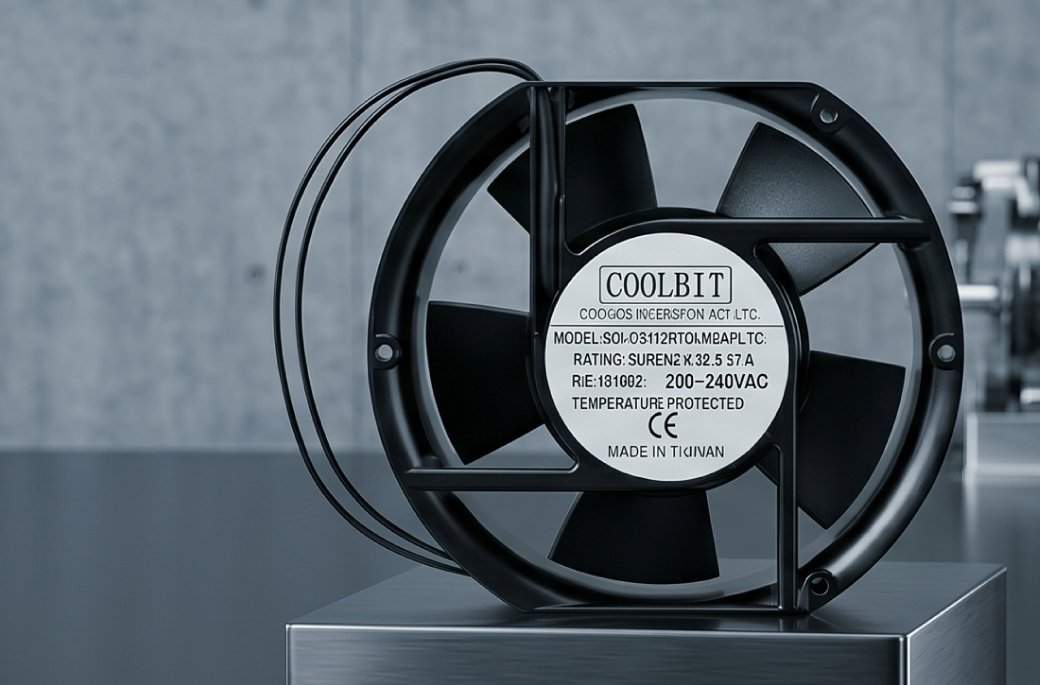
-
Class H Core Insulation: High-temperature protection up to 180°C.
-
Sufficient Copper Coil Turns: Guaranteed winding density for optimal performance.
-
Dual-Frequency Compatibility (50/60 Hz): 15% increase in coil turns for stable co-use.
-
Active Safety Protection: Overheating auto-cutoff thermal control system.
With a "no-compromise" approach to quality, we utilize high-specification thermal protection devices. Featuring a premium temperature switch positioned tightly against
the coil, the circuit is precisely and automatically disconnected the moment the coil temperature reaches 105°C. (As shown in Figure 1)
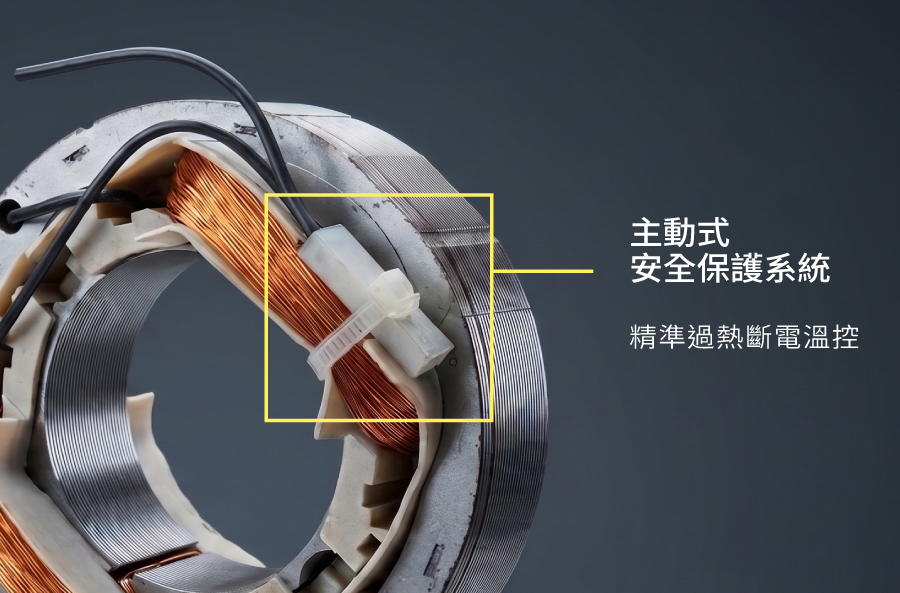
▲ Fig. 1
Core Insulation Standard: Class H protection against high temperatures up to 180°C.
Our motor windings utilize rigorously verified Class H enameled copper wire.
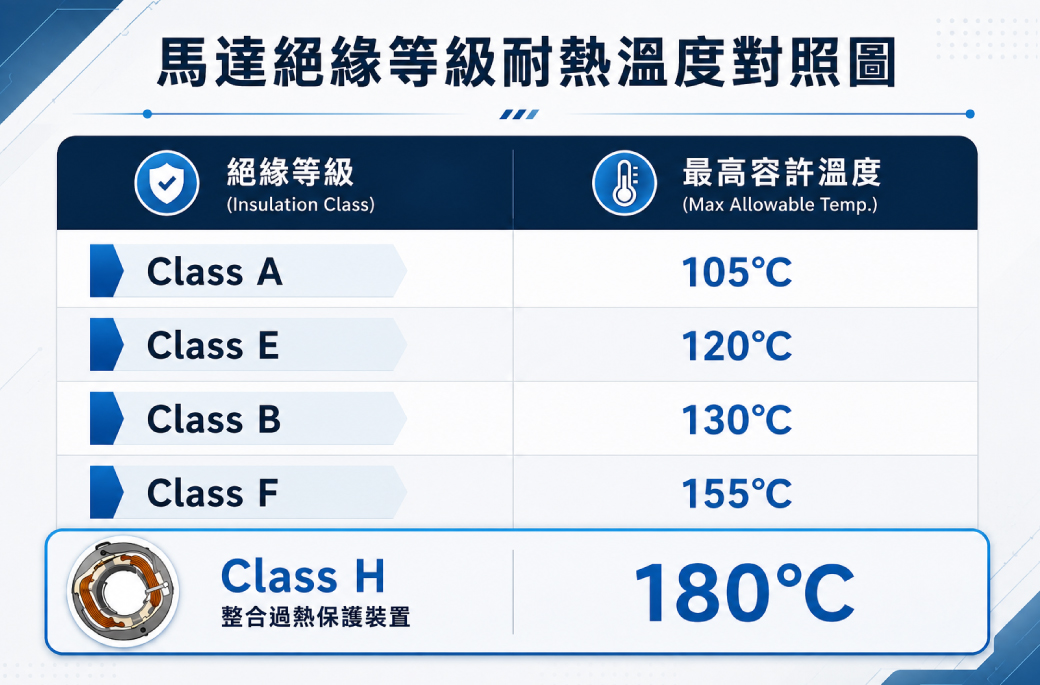
- Thermal Limits: The surface coating of our enameled wire delivers heat resistance up to 180°C, far exceeding the standard Class B (130°C) or Class F (155°C) limits commonly found in industrial applications.
- Technical Advantages: The insulation materials we select possess exceptional thermal stability. Even when the motor operates under heavy loads and generates elevated temperatures, the insulation layer maintains superior flexibility and dielectric strength. This effectively prevents inter-turn short circuits caused by insulation embrittlement, significantly extending the product's lifespan.
Copper vs. Aluminum Wiring | Safety and Reliability Differences
Inferior Market Alternatives: To cut costs, some low-priced motors on the market replace copper with aluminum wiring. However, aluminum has poorer electrical conductivity, despite costing only about one-third of the price of copper.
Fire Hazards: Aluminum has an extremely high coefficient of thermal expansion. Frequent thermal expansion and contraction can easily cause connection points to loosen, generating electrical arcing and significantly increasing fire risks. Furthermore, aluminum has a lower melting point (approximately 660°C), making it far more susceptible to burning out under extreme conditions.
.jpg)
Active Safety Protection: Over-Temperature Thermal Cutoff System
To ensure the long-term operational safety of your equipment, we have integrated high-sensitivity overheat protection devices directly into the motor winding structure.
-
Precision Temperature Control: The sensing elements are securely tied and integrated directly with the windings (as shown in the diagram). This configuration enables real-time tracking of core coil temperature variations, effectively eliminating any localized hot spots.
-
Intelligent Power-Off Protection: When the winding temperature approaches the upper safety threshold, the thermal control system triggers a mandatory shutdown, cutting off the power supply. This ensures that the motor remains within a safe operational envelope—even under unexpected overload conditions—and prevents irreversible thermal damage to the winding's enameled coating.
Watch More Tech Videos